
If you’ve been tattooed by more than one person (which I strongly encourage), then your brain is likely filled with scattered instructions all varying in how to take care of your tattoo. One artist slapped saran wrap on you, taped you up and sent you on your way. The next one wrapped you in what looked like the pads from the bottom of a pack of beef and told you to leave it on for twelve hours before washing it for the first time. One artist told you to use Lubriderm, while the other once suggested Aquafor, and someone else told you not to use anything at all.
Well, what the fuck is the right answer?
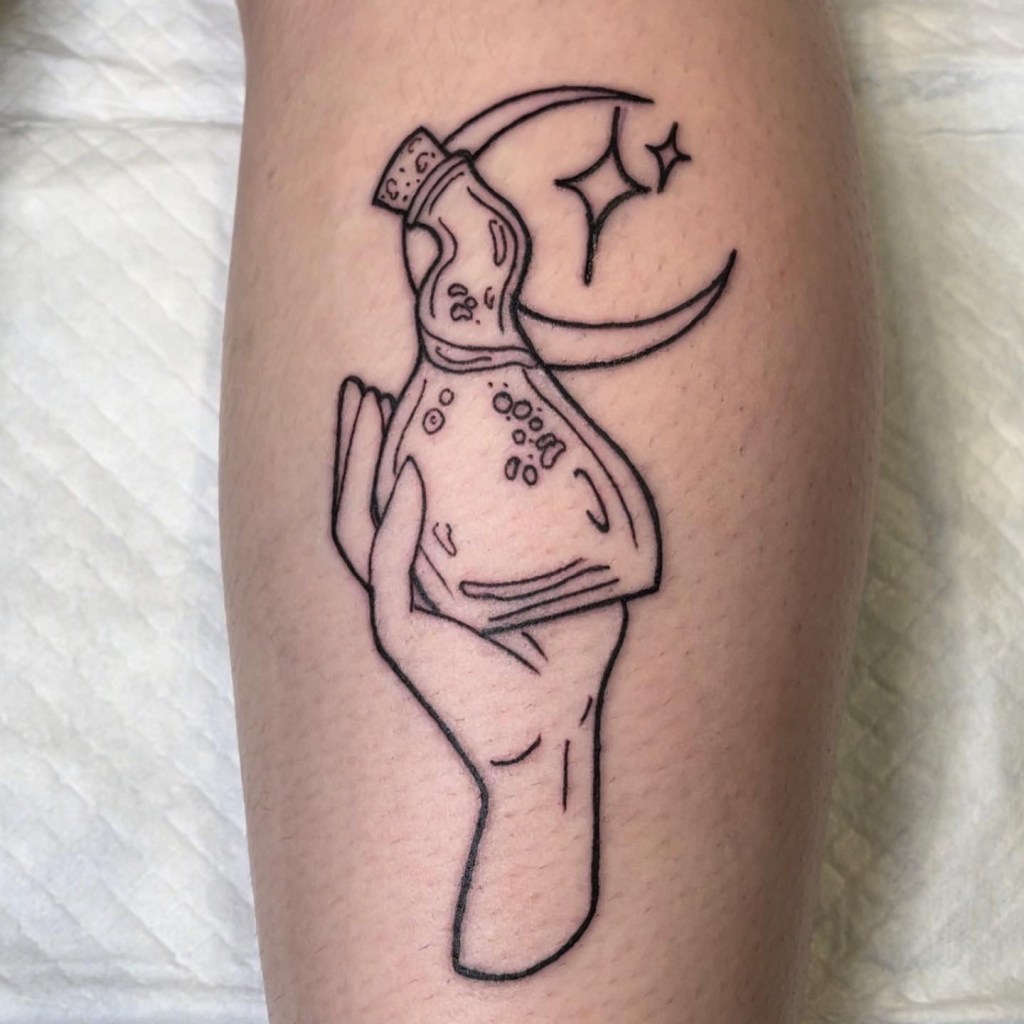
I’m sorry to be the bearer of bad news, but there isn’t one particular ‘right’ answer.
There is-however, a whole lot of wrong ones.
When I first started getting tattooed at age twenty, I had a piece of saran wrap taped to my thigh that insisted on moving and detaching from my leg as I drove back home from Toronto. It was an uncomfortable experience but I loved the work the artist did, so I kept going back. With time, I grew more comfortable with healing tattoos and that lead me to simply rip off the covering as soon as I got to the car. All of my tattoos by Taylor were blackwork, with simple shading and linework and alot of negative space so they didn’t weap as severely as other styles. I would simply just wash the tattoo after my hour and a half drive home.
The second tattoo experience I had was with a different artist. Allie slapped one of those meat pack bandages on and taped my leg well. I was to leave it on for at least six to eight hours. This was my first tattoo with grey shading which weaped a little bit within the first hours of its life on my skin. I remember rolling over in the middle of the night, unused to the feeling of heat coming from my skin. I was careful not to sleep on it, cautious still with my tattoos.
As I started getting bigger, more fully shaded tattoos, I got used to my body’s reaction. I was able to anticipate the amount of inflammation and weaping that would occur. Even after being diagnosed with fibromyalgia, the only difference in getting a tattoo wasn’t the healing process but the exhaustion that would fill me the day after getting inked.
When I began getting colour tattoos, I had to change my routine entirely. By that time I was a tattoo artist myself, but had little experience with colour. I followed the instructions that I gave my clients and wound up forgetting about the oozing artwork on my art, throwing on a warm fleece sweater before I dove into bed that night. In the middle of the night when I got up to go to the washroom, I realized my error. The weaping plasma from my arm had dried against the fleece fabric. I didn’t realize how effectively this glued the sweater to my skin but I was curtly reminded as I removed it, ripping the baby hairs and pores with it. The sweater was dark but had it not been, I gaurentee I would’ve saw an imprint of my new strawberry tattoo on my clothing. From then on I decided to only heal my colour tattoos with a product called Saniderm. You may have heard of it as Second Skin, Tagaderm, Hypafix, etc.
Why do tattoo artists have so many different opinions on healing?
I could compare it to the way that chefs all have different techniques, but the difference between the slab of meat they handle and your slab of meat is that you are a living, breathing human.
Skin is the most variable, unreliable canvas that an artist could chose and tattoo artists tackle this canvas everyday. Everyone’s skin is unique, and every artists process is unique- meaning that the steps that work to heal your tattoos may not be the same as someone else’s. Further, some artists techniques may require a specific type of healing process and that’s cool too as long- as long as it’s hygienic .
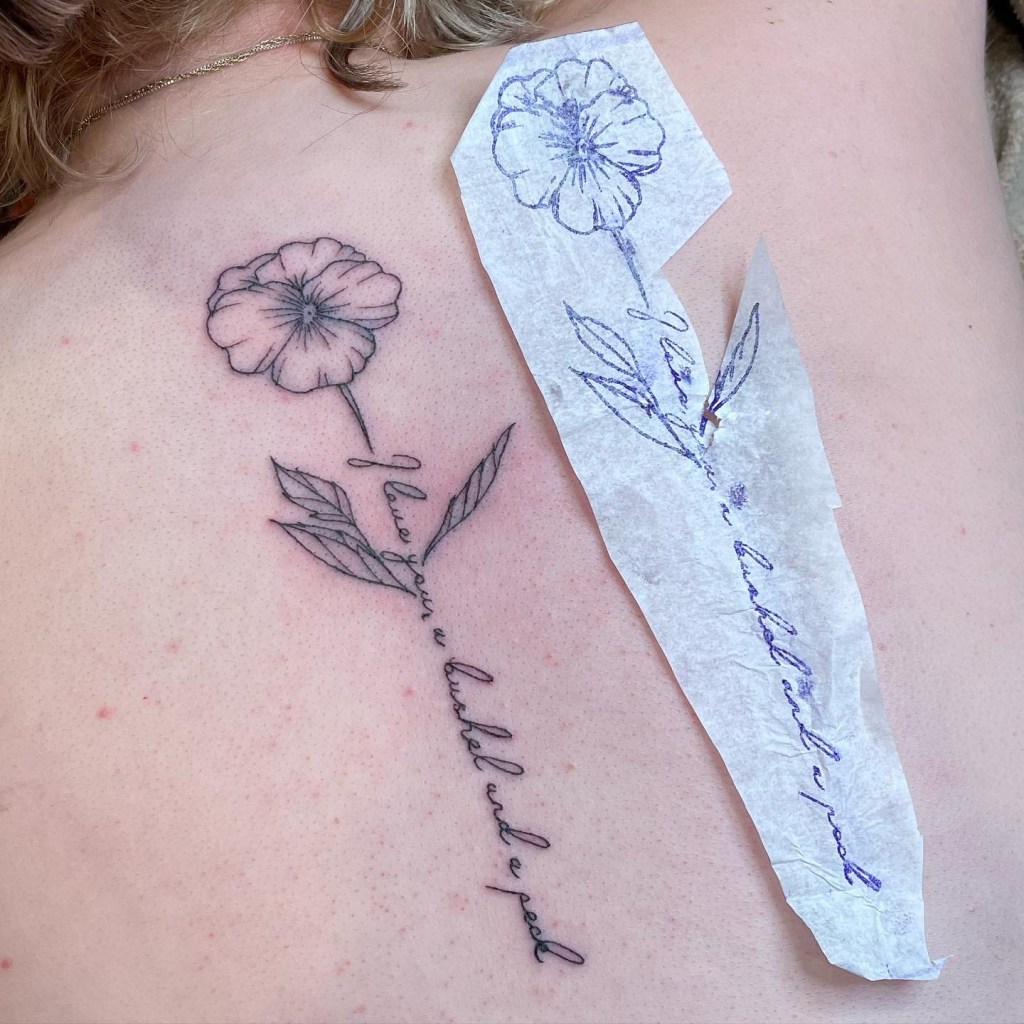
Here’s what I don’t recommend…
Although the saran wrap trick was the industry standard fifteen years ago, it’s the best way to suffocate your tattoo and harbour bacteria underneath it. Now, most reputable artists will ensure that your tattoo is clean as can be before putting the Saran Wrap on you, so the risk of bacteria pooling is low however the longer you leave that on, the greater the risk gets. Don’t keep Saran Wrap on your fresh tattoo for longer than an hour or two.
Another no no would be applying moisturizer more than 3-4 times again. Too much moisturizer can keep the skin…well… moist. This is another opportunity for bacteria to form and breed while your tattoo is healing. Additionally, too much moisturizer while healing can actually dull the tattoo once it’s fully healed. I also find that no moisturizer can also dull the tattoo. It’s all about finding a happy medium that works for your skin.
Another outdated practice that I despise is leaving on the bandage for over twelve hours. In my experience, this isn’t necessary unless you’ve tattooed a large area like a whole back or whole sleeve in one long session. Leaving a regular bandage on for longer than six hours tends to create a larger scab from the plasma pooling on top of the skin. While this effective when using a transparent adhesive bandage that is because the transparent bandage creates a closed healing environment. Regular non adherent pads or bandages are not as breathable as transparent skins are and can, again, harbour bacteria and potentially create a larger scab.
As long as you have no allergies to adhesives or latex- try using a “Second Skin” product. Second skin, saniderm, or tagaderm are all transparent adhesive bandages that are breathable and hygienic. These bandages keep a safe moist environment for the tattoo to heal in, eliminating the uncomfortable “scabby” stage of the tattoo heal.
Otherwise, I encourage all clients to wash twice a day for the first few days. For colour tattoos, I recommend washing even a third time on the first day of the tattoos life to remove any weeping plasma from the skin. After the first few days you should feel the skin tighten slightly, similar to the feeling or dry or chapped skin. You can start moisturizing with a non scented lotion 2-4 times a day max. I tell all my clients to keep it simple and to stick to what works for their skin type. Clients with normal skin may prefer something lighter like Lubriderm. Drier skin types may opt for Aquaphor or Aveeno. I encourage anyone with problem skin to use the healing balm I make and sell at the shop: a blend of Shea butter, cocoa butter, oils and essential oils all design to aid in skin healing.
Do you know what works to heal your tattoos? Do you use the same routine everytime? Let me know below in the comments!
 NEEDLE&QUILL
Leave a comment